the best sleep sounds for a blissful night’s sleep
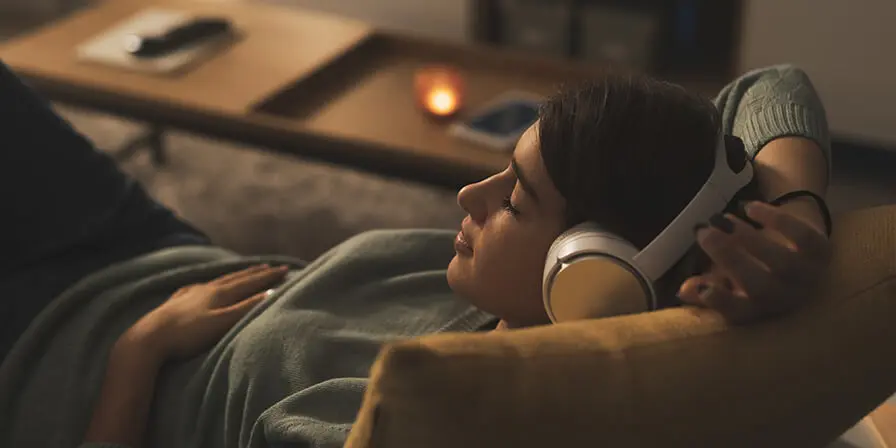
When you’re struggling to put your mind at ease and slip into a deep night’s slumber, sleep sounds can help fill your bedroom with a relaxing atmosphere as you drift away. From white and pink noise to natural rain, ocean and waterfall sounds, explore some of the most popular background noise for sleeping and find the perfect sleep sounds for you today.
the sleep summary
Playing noise while you sleep can help mask disruptive noises at night and create a calming environment to help you sleep longer each night.
White noise can help you sleep by providing a steady, even stream of noise which can help put your brain in a relaxed state as it avoids sudden spikes in volume.
Nature sounds such as falling rain, waterfalls and even thunderstorms can also help you to unwind before bed, reducing anxiety and stress to make falling asleep easier.
how does sound impact our sleep?
To put it simply, sound stimulates the brain and impacts how well we sleep. Some sounds, such as loud bangs, alarms, sirens or even snoring, can be disruptive for sleep, leading to a worse night’s rest. Other noises, what are often called sleep sounds, are designed to help us sleep better, whether that’s by blocking out disruptive sounds or creating a calming atmosphere.
the science behind sleep sounds
Research from the Sleep Foundation suggests that sounds play a huge role in our sleep cycle and can dictate how much time we spend in light, deep and REM sleep. Loud, disruptive noises can disrupt our sleep pattern, raise our heart rate and make it more difficult to sleep.
On the other hand, scientific research into noise as a sleep aid suggests that constant noise throughout the night can either improve or worsen sleep. This means it’s important to find the right sleep sounds for you.
how to choose sleep sounds for you
Our response to sound is truly unique and individual, and can stimulate negative and positive emotions. When trying out different sleep sounds for the first time, pay close attention to what relaxes you.
You may find you have a better reaction to gentle, rhythmic sleep sounds or you might prefer something melodic. There are many sleep sounds available that you can try for free to help figure out what works best for you.
what are the different kinds of sleep sounds
There are several different types of sleep sounds, with each offering a different soundscape to help you rest easier. While the right sleep sound for you will likely be down to personal preference, we’ve collected a few of our favourites to start you on your sonic slumber journey.
white noise
White noise is effective at masking other noises that can lead to disrupted sleep and is a mixture of all sound frequencies at once, at the same level of intensity.
Just like a whirring fan, white noise provides a stream of sound that is steady and even. This even distribution of noise is thought to help reduce the brain’s reactivity to spikes in volume, so environmental noises such as the slamming of doors and car horns are less likely to disrupt your sleep. You can get white noise through apps or you can buy a dedicated white noise machine, which may offer better sound quality.
pink noise
Most people are familiar with white noise, but emerging research shows that pink noise may also be beneficial for sleep.
So, what is pink noise? Pink noise contains a range of all audible frequencies, with more power in the lower frequencies, and is often considered more relaxing than white noise, as it’s not as high pitched. This type of sound closely mimics noises found in nature, such as rain, wind, waterfalls and ocean waves.
nature sleep sounds
Nature sounds, such as the noise of a forest or the wilderness, can help you to wind down before bed. Listening to nature sounds also reduces awakenings during the night and improves sleep quality too. Research carried out by scientists at the University of Sussex has shown that nature sounds lead to an increase in outward-focused attention, rather than inward-focused. Attention that is inward-focused is linked to stress, anxiety and depression, all of which can have a negative impact on sleep.
ocean waves
Using sea sounds for sleep is a popular choice amongst people, the rhythmic crashing of water onto the sand or rocks can provide a calming and soothing feel. The sound of ocean waves creates a sense of relaxation, happiness and gentle focus, making it deeply relaxing. It’s not just the sound of the ocean waves that are good for relaxation and sleep; other water noises can have the same effect.
rain sounds for sleeping
Using rain sounds for sleeping can greatly improve your night's sleep. The soothing sound of rain helps to create a peaceful and calm environment, promoting relaxation and reducing stress. It can also drown out disturbing noises and provide a consistent background noise that helps to lull you into a deep and restful sleep.
wind sounds for sleep
Using wind sounds for sleeping can greatly improve your night's sleep. The gentle, rhythmic sound of wind can help create a soothing and relaxing environment, promoting relaxation and easing stress. It can also drown out external noises, making it easier to fall asleep and stay asleep throughout the night.
relaxing music as sleep sounds
Lower blood pressure, a slower heart rate and reduced anxiety are all benefits of listening to relaxing music, which in turn leads to a better night’s sleep. Music can decrease the time it takes to fall asleep and improve sleep quality.
But how exactly does music affect sleep? Sleeping to music helps to reduce levels of the stress hormone, cortisol, and so you feel more relaxed and at ease. It also triggers the release of dopamine, boosting good feelings at bedtime and lowering pain levels too. Try to keep your music on the calm side as you sleep, as dopamine is a wake-promoting neurotransmitter, and too much can keep you awake.
When choosing music for sleep, consider the tempo. Studies have shown that music with a slow rhythm, between 60-80 beats per minute, is ideal as the normal resting heart rate is within this range and so the body may sync up with slower, more soothing sounds.
meditation soundtracks
Meditation and mindfulness promote a relaxed state of mind, which is beneficial when it comes to falling asleep. There are various meditation soundtrack apps and albums that are specifically created to help you sleep. These meditation apps can include narrative storylines, breathing programs and soundscapes, all designed to help with sleep.
ASMR sounds to help you sleep
ASMR stands for Autonomous Sensory Meridian Response. While that might sound a bit complex, ASMR is actually one of the most popular sleep sounds, and potentially one of the most effective.
Consisting of soft speech and tapping sounds to make the brain tingle, ASMR can help people feel calm and relaxed, and can be especially helpful just before bed.
To find out more, check out our ASMR guide and find out how it can help you sleep better.
create the best sleep environment with Silentnight
In addition to making use of sleep sounds, you should also make sure to create the best sleep environment to ensure a perfect night’s rest. Why not check out the rest of our guides and find the perfect bed or mattress for you.
frequently asked questions about sleep sounds
what are the best sleep sounds for babies?
White noise has been known to help babies sleep as the ambient noise can drone out any disruptive noises whilst mimicking the natural sounds of the womb to keep them calm and comfortable.
what sleep sounds are best for noisy environments
White noise is often the best sleep sound for blocking out sudden, noisy sounds by creating a consistent soundscape. For environments with uninterrupted loud noises, deeper sleep sounds, such as rain or thunder, are the best for drowning out constant noise.
what are the best sleep sounds for overthinkers?
People overthink when thoughts are consistently occupying their brain which can making falling asleep difficult. Sleep sounds, such as pink or white noise, and meditation sounds, can settle the mind and reduce feelings of anxiety for a better night’s sleep.